For a long time, much of pet care was treated as occasional.
You booked the appointment when the dog needed it. You found a provider when a problem came up. You relied on whoever was available, close, or familiar enough.
That model still exists. But consumer expectations are changing.
Pet parents are increasingly looking for care that fits into the rhythm of their lives, feels trustworthy, and creates a better experience for both the pet and the household.
The shift from occasional service to routine care is being driven by three forces: confidence, consistency, and convenience.
Confidence because pet parents want to know their pet is safe, understood, and cared for well. Consistency because a familiar provider, process, and experience reduce uncertainty. Convenience because modern households expect important services to be easier to access, schedule, and repeat.
That shift matters because the most valuable consumer service categories rarely stay purely transactional. Over time, they move toward relationships, routines, and systems.
Fitness did this. Personal care did this. Wellness did this. Food service did this. In each case, the opportunity grew when brands made the experience easier to repeat, easier to trust, and easier to fit into daily life.
Pet care is entering a similar stage.
The market foundation is already significant. U.S. pet industry expenditures reached $158 billion in 2025 and are projected to reach $165 billion in 2026. An estimated 95 million U.S. households own at least one pet.1
But the deeper driver is the role pets play inside the household. Pew Research Center found that 97% of U.S. pet owners say their pets are part of the family, and about half say their pets are as much a part of the family as a human member.2
When a pet is viewed as family, the standard for care changes.
Pet parents are not just looking for a service. They are looking for trust over time.
Routine care is not only about frequency. It is about relationship.
A recurring relationship creates familiarity. The team gets to know the pet. The pet parent knows what to expect. The service becomes less reactive and more proactive. The experience becomes easier, more predictable, and more valuable.
That does not mean every pet needs the same schedule or the same services. It means the category itself has a natural rhythm.
This is one reason pet care is becoming more interesting to operators, investors, landlords, lenders, and strategic partners. Recurring behavior changes how a category is understood. It creates stronger customer relationships, supports more predictable demand, raises the importance of experience, and rewards brands that can build systems around trust.
But recurring care does not scale just because consumers want it.
It scales when the operating model can support it.
Pet care is a people-delivered service. The quality of the experience depends on training, standards, safety, retention, and consistency across teams and locations.
At Sparkle, we see the shift toward routine care through the lens of Quick Service Pet Care, or QSPC.
QSPC is our way of describing a more consistent, hospitality-led approach to routine pet hygiene and grooming. It is not about making pet care feel transactional. It is about making routine care easier to access, easier to trust, and easier for teams and operators to deliver well.
For pet parents, that means less uncertainty and more confidence. For pets, it means a more familiar experience. For teams, it creates a clearer service rhythm. For operators, it supports a model built around relationships rather than one-time transactions.
For institutional stakeholders, it points to a category becoming more organized, more repeatable, and more relevant to modern household behavior.
That is why the shift from occasional services to routine pet care matters.
It is not just a change in appointment frequency.
It is a change in how the category is being defined.
Pet care is becoming more relationship-driven, more convenience-driven, more trust-driven, and more connected to the way families actually live.
That is the kind of shift that can turn a fragmented service category into a more durable consumer platform.
About the Author
Ben Crawford is Co-Founder + CEO of Sparkle Grooming Corp., a wellness-focused dog grooming franchise helping define the emerging Quick Service Pet Care category. Ben’s perspective focuses on the market forces shaping pet care, consumer behavior, franchise growth, and scalable service platforms.
Sources
- American Pet Products Association, “U.S. Pet Industry Reaches $158 Billion in 2025, Poised for Continued Growth in 2026,” March 26, 2026. View source
- Anna Brown, “About Half of U.S. Pet Owners Say Their Pets Are as Much a Part of Their Family as a Human Member,” Pew Research Center, July 7, 2023. View source
Not your average franchise.
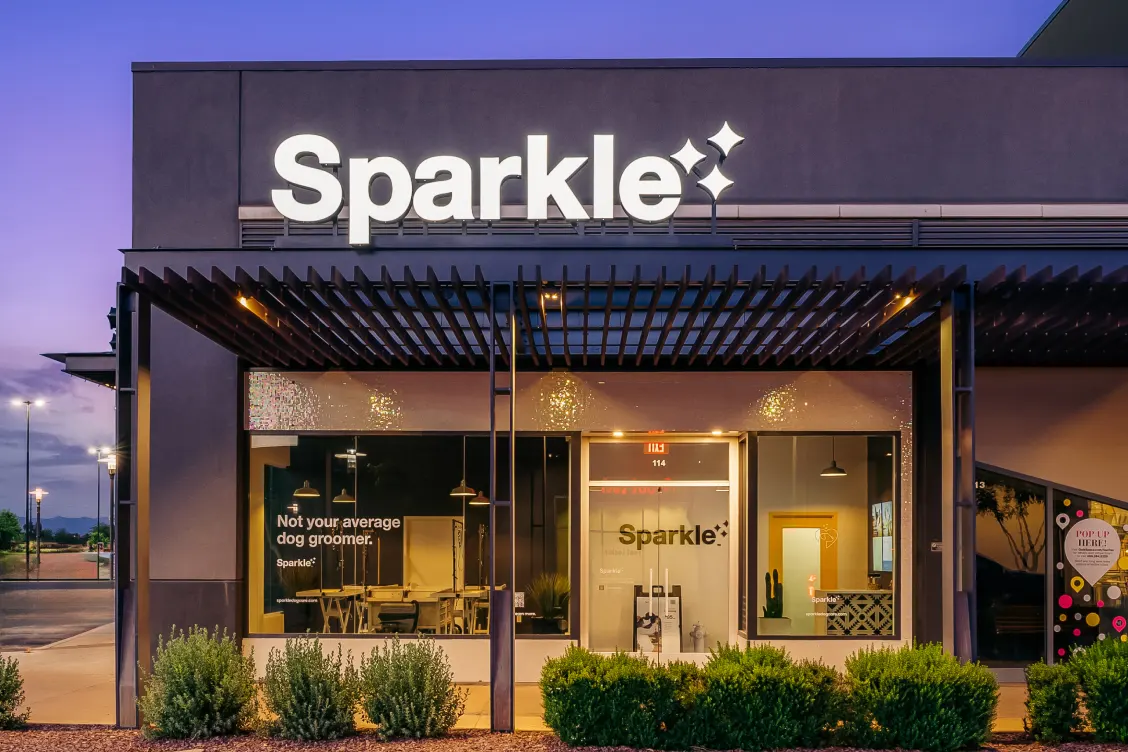
Sparkle is where routine pet care meets small-box retail + social service. Our membership-based QSPC is an essential companion for any dog's health + well-being.
Learn More